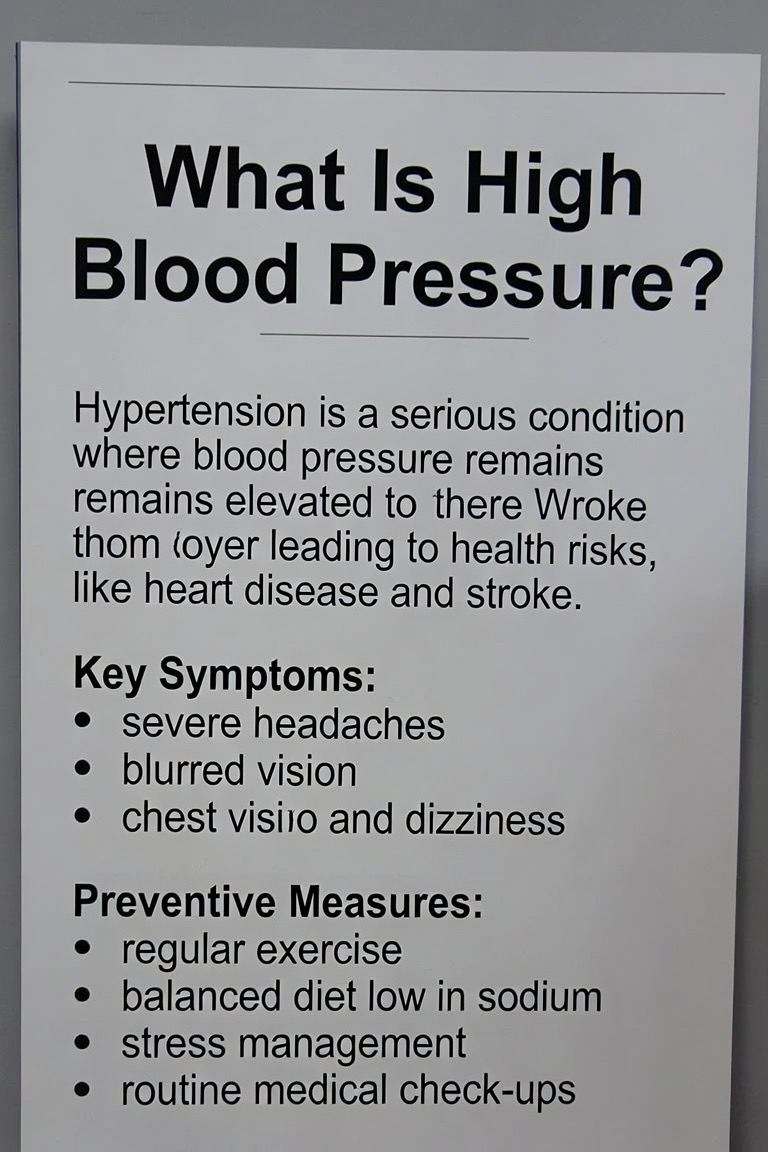
Half of all American adults have high blood pressure, also known as hypertension. Many don’t even know it. High blood pressure develops when blood flows through your arteries at higher-than-normal pressures.
Blood pressures are written as two numbers separated by a slash like this: 120/80 mm Hg. You can say this as “120 over 80 millimeters of mercury” or just as “120 over 80.” The first number is your systolic pressure — that’s the force of the blood flow when blood is pumped out of the heart. The second number is your diastolic pressure, which is measured between heartbeats when the heart is filling with blood.
Your blood pressure changes throughout the day based on your activities. A healthy systolic blood pressure is less than 120 mm Hg. A healthy diastolic pressure is less than 80 mm Hg. Your blood pressure is high when you have consistent systolic readings of 130 mm Hg or higher, or diastolic readings of 80 mm Hg or higher.
Blood pressure levels
| Blood Pressure Category | Systolic and Diastolic Pressure (mm Hg) |
|---|---|
| Normal | Less than 120 systolic pressure AND Less than 80 diastolic pressure |
| Elevated | 120 to 129 systolic pressure AND Less than 80 diastolic pressure |
| High Blood Pressure Stage 1 | 130 to 139 systolic pressure OR 80 to 89 diastolic pressure |
| High Blood Pressure Stage 2 | 140 or higher systolic pressure OR 90 or higher diastolic pressure |
| Hypertensive Crisis | Higher than 180 systolic pressure OR Higher than 120 diastolic pressure Contact your provider immediately. |
Symptoms from high blood pressure don’t usually occur until it causes serious health problems. About 1 in 3 U.S. adults with high blood pressure aren’t even aware they have it and are not being treated to control their blood pressure. That’s why it is important to have your blood pressure checked at least once a year. Regular monitoring using home blood pressure is also recommended.
To control or lower high blood pressure, your healthcare provider may recommend that you adopt a heart-healthy lifestyle that includes:
- Choosing a heart-healthy dietary pattern and foods such as those in the DASH eating plan, the Dietary Guidelines for Americans, or the Mediterranean eating pattern
- Being physically active and reducing sedentary behavior
- Losing weight for people with overweight or obesity
- Quitting smoking
- Reducing stress
- Getting enough good-quality sleep
Your healthcare provider may also recommend medicines to help control your blood pressure.
Controlling your blood pressure can help prevent or delay serious health problems such as chronic kidney disease, heart attack, heart failure, stroke, and possibly vascular dementia.
Find research studies and get resources on high blood pressure.
Original Article – https://www.nhlbi.nih.gov/health/high-blood-pressure